
Issue 17: When Positive Thinking isn’t Postive
When did we start believing that the path to transformation was pretending we’re fine?

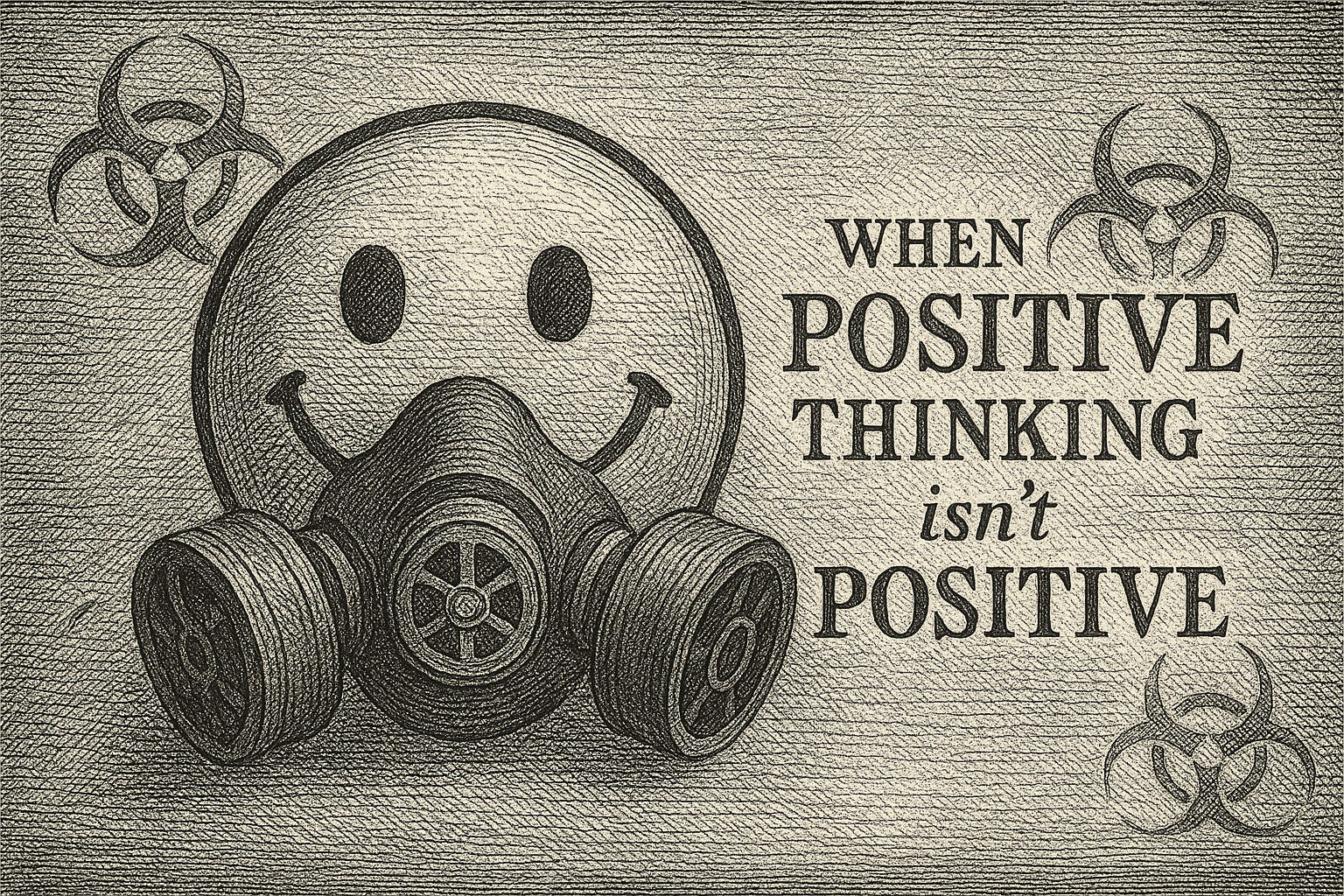
I scrolled through my Instagram feed this morning and felt something close to nausea. Everyone beaming. Everyone grateful. Everyone crushing it, living their best life, manifesting abundance. The relentless performance of happiness feels almost psychopathic, like watching people smile while their houses burn down.
There’s a particular kind of narcissism to toxic positivity. It’s not just that people are pretending to be happy, it’s that they’re demanding you pretend too. Your grief makes them uncomfortable. Your struggle disrupts their carefully curated reality. So they offer you platitudes: “Everything happens for a reason!” “Just choose joy!” and this is the one I really detest- “Good vibes only!”
Meanwhile, the world is on fire. Children are starving. The climate is collapsing. Democracy is eroding. And we’re supposed to smile and manifest our way through it?
What if real transformation requires something our culture has forgotten: the courage to face what’s actually difficult?
The Girl Who Lost Her Hands
There’s a Grimm’s fairy tale that makes people deeply uncomfortable: The Handless Maiden.
A father makes a deal with the devil and accidentally promises his daughter in exchange for wealth. To save herself, the girl must cut off her own hands. She wanders the world handless, surviving through her wits and the kindness of strangers. Eventually she grows silver hands, not through positive thinking or “choosing joy,” but through accepting her mutilation and learning to live with her wound.
The story doesn’t offer false comfort. It says: sometimes terrible things happen to you. Sometimes people you trust betray you. Sometimes you lose essential parts of yourself. And the path forward isn’t pretending it didn’t happen, it’s learning to live as someone fundamentally changed.
The Handless Maiden gains power not by getting her hands back and pretending nothing happened. She gains power by accepting what was done to her and discovering what becomes possible when you stop trying to be who you were before.
What Buddhism actually teaches about suffering
The First Noble Truth of Buddhism is often misunderstood. It doesn’t say “suffering is good” or “suffering makes you stronger” or “everything happens for a reason.”
It says simply: Dukkha exists. Suffering, dissatisfaction, unsatisfactoriness, it’s part of being human. Birth is difficult. Aging is difficult. Illness is difficult. Death is difficult. Getting what you don’t want is difficult. Not getting what you want is difficult.
This isn’t pessimism. It’s accurate perception.
The problem with toxic positivity is that it denies the First Noble Truth. It insists we pretend suffering doesn’t exist, or that we can transcend it through the right thoughts, the right attitude, the right manifestation practice. It’s spiritual bypassing dressed up as wellness.
But Buddhism offers something different: Skillful Means. This is the practice of working with reality as it actually is, not as we wish it were. Not drowning in suffering, but not denying it either. Meeting difficulty with clear eyes and asking: “How do I respond to this skillfully?”
The Handless Maiden practices Skillful Means. She doesn’t deny that her hands are gone. She doesn’t pretend. She accepts the reality of her mutilation and learns to live differently. And from that acceptance, not from denial, comes transformation.
The Woman Who Faced Cancer at 38
Dr. Caitlin McDonald was diagnosed with aggressive breast cancer at 38. Not “everything happens for a reason”, cancer for one. It is not a gift. It was just brutal, terrifying, life-altering cancer.
She could have performed positivity. Could have posted inspirational quotes about her journey. Could have pretended it was all part of some divine plan.
Instead, she practiced what Buddhism teaches: she acknowledged dukkha. She didn’t deny the suffering. She didn’t try to positive-think her way out of terror. She met the reality of cancer with clear eyes and asked: “How do I respond to this skillfully?”
This is the work she brings to her workshop “Awaken Your Courage” at our festival. Not positive thinking. Not manifesting. Not choosing joy. Just the hard, honest work of meeting yourself exactly where you are, even when where you are is terrifying. Learning to work skillfully with what is, rather than exhausting yourself pretending it’s something else.
The word courage comes from cor, Latin for heart. It originally meant “to speak one’s mind by telling all one’s heart.” Not performing strength. Not faking happiness. Speaking the truth of what you’re actually feeling, what’s actually happening.
This is what The Handless Maiden does. This is what the First Noble Truth asks of us. This is what genuine transformation requires.
The Quiet Revolutionary
Rachel Carson saw what was happening to the natural world and couldn’t stay silent. Her book Silent Spring exposed how pesticides were killing everything, birds, fish, humans, entire ecosystems.
The chemical industry called her hysterical, emotional, unscientific. They told her to be more positive, more balanced, more reasonable. They wanted her to pretend the birds weren’t dying.
She refused.
Lisa Schneidau’s workshop “The Resilient Voice” uses Carson’s story to explore what it takes to speak truth when everyone wants you to shut up and smile. Not the Instagram version of finding your voice, the real kind that emerges when you decide that bearing witness to reality matters more than being liked.
Carson didn’t manifest a better world through positive thinking. She changed the world by refusing to look away from what was actually happening, then finding the courage to speak about it clearly.
The Stories That Don’t Lie
Allison Galbraith’s “Courage for Life” workshop works with traditional stories precisely because they don’t traffic in toxic positivity. Baba Yaga doesn’t give you affirmations, she gives you impossible tasks and kills you if you fail. Scottish changeling tales don’t promise everything will work out, they tell you that sometimes the child you love isn’t who you thought they were.
These stories survived for centuries because they told the truth about the First Noble Truth: life includes suffering, loss, betrayal, difficulty. The way through isn’t pretending otherwise.
The stories teach Skillful Means, not avoiding suffering, but learning to work with it. Not toxic positivity that denies reality, but wise engagement that accepts what is and asks: “Now what? How do I live with this? What becomes possible when I stop pretending?”
This is why Buddhist teachers have always used stories. Not to make people feel better, but to help them see clearly. The Jataka tales don’t promise happy endings, they show transformation through difficulty. They acknowledge dukkha and then demonstrate skillful responses to it.
Why This Matters Now
We are living through multiple cascading crises. The climate is collapsing. Authoritarianism is rising. Children are starving while we watch. The old certainties are dissolving.
And into this, into undeniable dukkha on a global scale, the dominant culture offers us... positive thinking. Gratitude journals. Vision boards. The secret. Manifestation. Just choose to be happy!
It’s not just useless, it’s a fundamental denial of the First Noble Truth. It’s telling The Handless Maiden to visualize having hands instead of learning to live skillfully with their loss. It’s telling Rachel Carson to look on the bright side while the birds fall dead from the sky.
Buddhism offers something different: the Middle Way. Not drowning in despair, but not denying reality either. Not performing toxic positivity, but not collapsing into hopelessness. Meeting what is with clear eyes, feeling the grief of it, and then asking: “What’s the skillful response?”
Real transformation, the kind that might actually help us navigate what’s coming, requires this honest engagement with difficulty. Not bypassing it with affirmations, but meeting it with the courage to see clearly and act wisely.
The Workshops That Tell the Truth
This is why I’ve brought together these three workshops at Yorkshire Festival of Story. Each one, in its own way, teaches what the First Noble Truth and Skillful Means actually look like in practice.
Dr. Caitlin McDonald’s “Awaken Your Courage” teaches what she learned facing cancer: how to meet difficulty without denying it’s difficult, how to find genuine strength by acknowledging dukkha and then responding skillfully rather than pretending everything is fine.
Lisa Schneidau’s “The Resilient Voice” explores how to speak truth when the pressure to stay positive is overwhelming, using Rachel Carson’s story as a guide. How do you bear witness to suffering without drowning in it? How do you speak clearly about what’s happening without bypassing the grief?
Allison Galbraith’s “Courage for Life” works with traditional stories that embody the Middle Way, tales that acknowledge difficulty honestly but show transformation is possible through skillful engagement, not denial.
None of them will tell you to just think positive. None of them will sell you the fantasy that you can manifest your way out of real problems. All of them will ask you to do something the Buddha asked: see clearly what is, feel it honestly, and respond skillfully.
Because the world doesn’t need more performed happiness. It needs people who can face what’s actually happening, acknowledge the dukkha, and still choose to act with courage, wisdom, and care.
What if the transformation you’re seeking won’t come from denying dukkha, but from meeting it with skillful means?
If you’re ready for the real work, the kind that acknowledges suffering honestly and teaches skillful response rather than spiritual bypassing, join us at Yorkshire Festival of Story. Sometimes the hardest courage is just telling the truth
.