
Issue 32: When Love Refuses to Be Forgotten
Love is a practice. A story for Valentine's Day

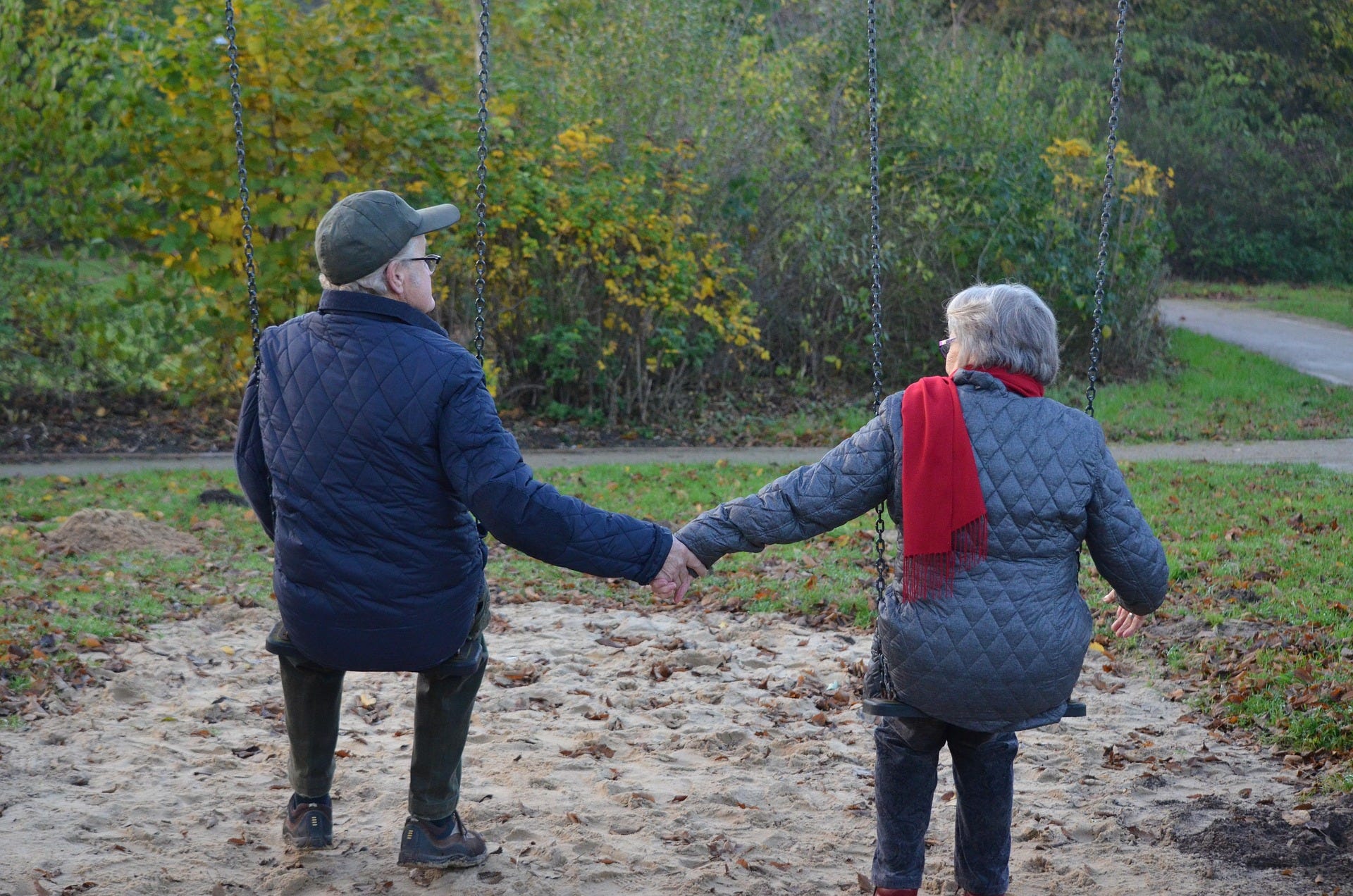
There is an old story of an elderly couple who are asked to reveal the secret of their sixty-year marriage. The husband reached into his pocket and drew out a short length of thick, weathered rope. It was covered in tight, gnarled knots.
“When we started,” he said, “the rope was smooth. But every time we hit a storm or a hardship, we tied a knot. Some knots were for grief, some for anger, some for mistakes.”
He handed the rope across. “You’ll notice that when a rope breaks and you tie it back together, it is actually shorter and stronger at the knot than it was when the rope was new. Our love isn’t the smooth rope anymore. It’s the knots that hold us together.”
I have been thinking about this story since I read about John and Agnes Carberry of Northern Ireland, who have been married for more than sixty years.
John is from a Catholic family in West Belfast. Agnes is from a Protestant family in Silent Valley. They met as children in a school where deaf children from both communities learned side by side, long before integrated education was established in the North.
“There were never bad words against each other or any sort of animosity because of religion,” John says. “It just didn’t exist in the deaf community.”
“We have had a lot of documentaries and books about the Troubles and the dark times,” he adds. “Where are the good stories?”
It is a question that stops me. Because I think I know where they are. I think they have been buried, by the way we tell history, which tends to organise itself around conflict and catastrophe.
What Kind of Story Is This?
At first glance, the rope story appears to be about endurance. Stay together long enough, survive enough storms, and the rope holds. But this reading is too passive, too accidental. It makes love sound like something that happens to you rather than something you practise.
Look more carefully, and something different emerges. The husband does not pull out the rope to show how much they have suffered. He pulls it out to show how the suffering became structured. Each knot is not a wound. It is a repair. A moment when the rope brok,e and they chose, actively, deliberately, to tie it back together.
This is a story about love as practice, not feeling. And it is far older than it looks.

The Four Qualities of Love
Buddhism offers one of the most precise maps of love I know. Romantic love and the fakery that sells Valentine’s cards don’t figure. It is love as a genuine practice of the heart, what in the Buddhist tradition we call the four Brahmaviharas, or the four immeasurable qualities.
They are metta, mudita, karuna, and upekkha. Loving kindness, sympathetic joy, compassion, and equanimity. Together they describe not a feeling but a way of being present to another person across the full complexity of a shared life.
Each one, I think, corresponds to a different kind of knot.
Metta or loving kindness, is the first knot. It is the foundational wish: may you be well, may you be happy, may you be safe. It is not about deserving something, but simply because you exist and you are you.
This is the knot tied in the early days, when love is still learning to be unconditional rather than transactional. It is also the knot you return to when everything else has frayed, the basic, renewable decision to wish the other person well.
John and Agnes tied the knot in a schoolroom where their families’ conflict simply had not arrived. Before the Troubles, before disapproval, before the weight of what their love would cost them. Metta is the first knot because it must be tied before the storms come.
Mudita or sympathetic joy, is perhaps the most overlooked. It is the capacity to take genuine delight in another person’s happiness, to find joy in their flourishing rather than feeling diminished by it. It is the opposite of envy, and it is harder than it sounds. Over sixty years, two people’s paths diverge and reconverge countless times. One thrives while the other struggles. One is seen while the other waits in shadow. Sympathetic joy is the practice of celebrating your partner’s light even when you are standing in darkness yourself.
For deaf couples navigating the Troubles, this quality had a particular texture. The documentary A Quiet Love captures something its producer Anne Heffernan describes as the beautiful eye contact between deaf couples, the necessity of looking at each other fully when you sign. You cannot communicate in sign language without attending completely to the other person. Mudita is built into the very structure of how they speak. Delight in the other is not optional. It is the grammar of the conversation.
Karuna or compassion, is the knot tied in the hardest moments. This is not about sympathy. Compassion is to be with another person’s pain without trying to fix it, without flinching away, without making it about yourself. This is the knot that takes the longest to learn and that, once learned, changes the entire texture of a relationship.
“Our independence was stripped away,” John says, describing what the Troubles meant for deaf people. They could not hear the bombings coming. They could not hear the gunfire. They navigated a conflict that communicated almost entirely in sound, in a silence that the conflict itself had no language for. To love someone through that, to be present to a fear you cannot fully share because you do not inhabit the same sensory world, requires karuna of a very particular kind. Compassion that does not require complete understanding. Presence that does not require explanation.
Upekkha or equanimity, is the final knot, and perhaps the most misunderstood. It is sometimes translated as indifference, but this is wrong. It is not the absence of feeling. It is the capacity to remain steady in the presence of feeling, to hold joy and grief, hope and disappointment, closeness and distance, without being swept away by any of them. It is the quality that allows love to weather the long middle of a marriage, the ordinary decades that are neither ecstatic nor tragic but simply the ongoing, unglamorous work of choosing each other.
The rope in the Yiddish story is not taut. It is knotted, which means it has slack in it, give, the room to move. Equanimity is the slack in the rope. It is what allows the other person to be fully themselves, to disappoint you, to change, to be difficult, without the whole structure snapping.
The Good Stories
“Where are the good stories?” John asks.
He is not asking for stories without knots. He has lived too long and too honestly for that. He is asking for stories that show what the knots made possible, the love that grew not despite the hardship but through it, knotted and shortened and stronger for every repair.
His story is showing in cinemas across Ireland right now, told in Irish Sign Language for the first time on a cinema screen. Audiences have wept simply at the experience of seeing their own lives reflected back to them.
“I never imagined that I would sit in a cinema like this with other deaf people and watch stories about my life and my experience on screen,” one audience member said.
This is what stories do when they are told with honesty and care. They do not smooth the rope. They make the knots visible. They say: this is what love looks like when it has actually lived, shorter, stronger, held together at every place it broke and was repaired.
The Yiddish elder understood this. So do John and Agnes, who says simply: “We’ve been able to show love and peace and equality by being together.”
This is not a declaration but a practice.

To Sit With
As Valentine’s Day arrives, with all its pressure to perform the smooth rope, the grand gesture, the perfect feeling, the love that has never broken, I want to offer these questions instead.
Which of the four qualities is hardest for you right now? Where does your love ask for more metta, more mudita, more karuna, more upekkha?
Where in your closest relationships is the rope fraying, and what would it mean to tie the next knot with intention, rather than waiting for the break?
Love always will win, John says. Four letters. L-O-V-E.
The rope knows why.
Their story is told in the documentary A Quiet Love, currently showing in cinemas across Ireland, Ireland’s first feature film in Irish Sign Language. I hope it comes to England.
With love
Sita
PS If this resonated, please share it with someone who needs to hear that the knots are the point.
The Storyteller’s Compass is a reader-supported publication. To receive new posts and support this work, consider becoming a free or paid subscriber.